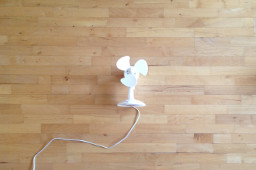
Energy of sound field
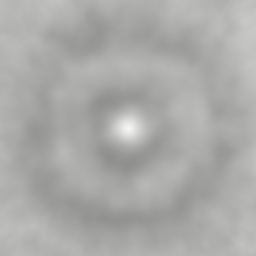
|
Dipole sound field
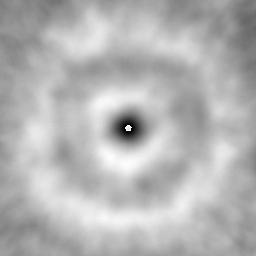
|
The strongest sound is from the propeller blades and axis, as can be seen from the image on the left. But there are also chaotic rings of sound further out.
Further analysis shows that the max in the middle is noise from the propeller shaft, originating from its bearings. Further out are the whoosh noise from the propeller blades passing through air. And the chaotic rings seem to be breaking vortices from the blades.
|
|
|
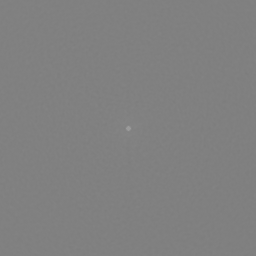
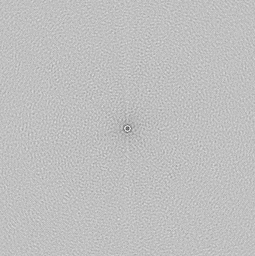
16 KHz octave
They grey in the background is the noise floor. It consists mainly of measurement noise.
This highest frequency sound only comes from the fans axis, as can be seen from the small white dot in the middle. Since the dot is dark in the dipole sound field, it is a monopole, like most loudspeakers. The lines going out from it show that it is an intermittent pulsed sound, like grating, which fits well with the axis grating in its bearing, and it does indeed get warm.
|
|
|
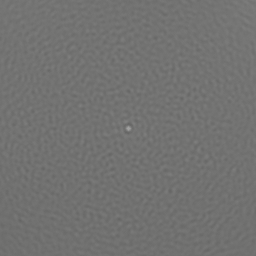
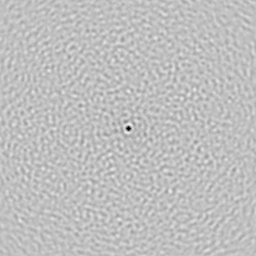
8 KHz octave
Same dot in the middle, except the grating pulses are gone.
The noise floor is also easier to see, and a little darker because the axis sound
is louder.
|
|
|
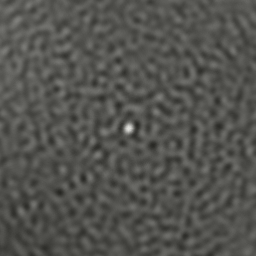
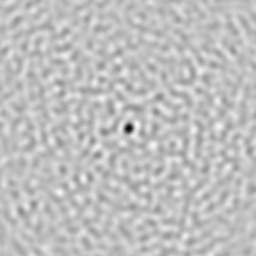
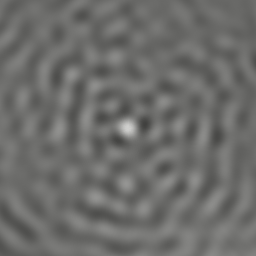
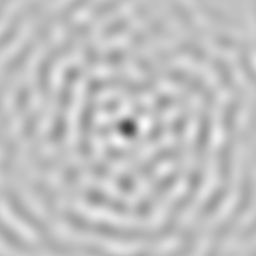
4 KHz octave
Same effects.
|
|
|
2 KHz octave
Same effects.
|

|

|
1 KHz octave
This seems to be the wooshing from the propeller blades.
It fits well with what I hear from it.
|

|

|
500 Hz octave
This chaotic ring seems to be breaking vortices.
I can feel the turbulence when I stick my hand into it.
And when I stick my ear into it the frequency seems right.
|

|

|
250 Hz octave
Seems to be hum from the electric motor.
|

|

|
125 Hz octave
Ambient. Probably ventilation. Motor too.
|
By Kim Øyhus (C) 2018-5-3